
Why Waiting To Sell Your House Could Cost You a Small Fortune

Why Waiting To Sell Your House Could Cost You a Small Fortune | MyKCM

Many homeowners who plan to sell in 2022 may think the wise thing to do is to wait for the spring buying market since historically about 40 percent of home sales occur between April and July. However, this year’s expected to be much different than the norm. Here are five reasons to list your house now rather than waiting until the spring.

1. Buyers Are Looking Right Now, and They’re Ready To Purchase

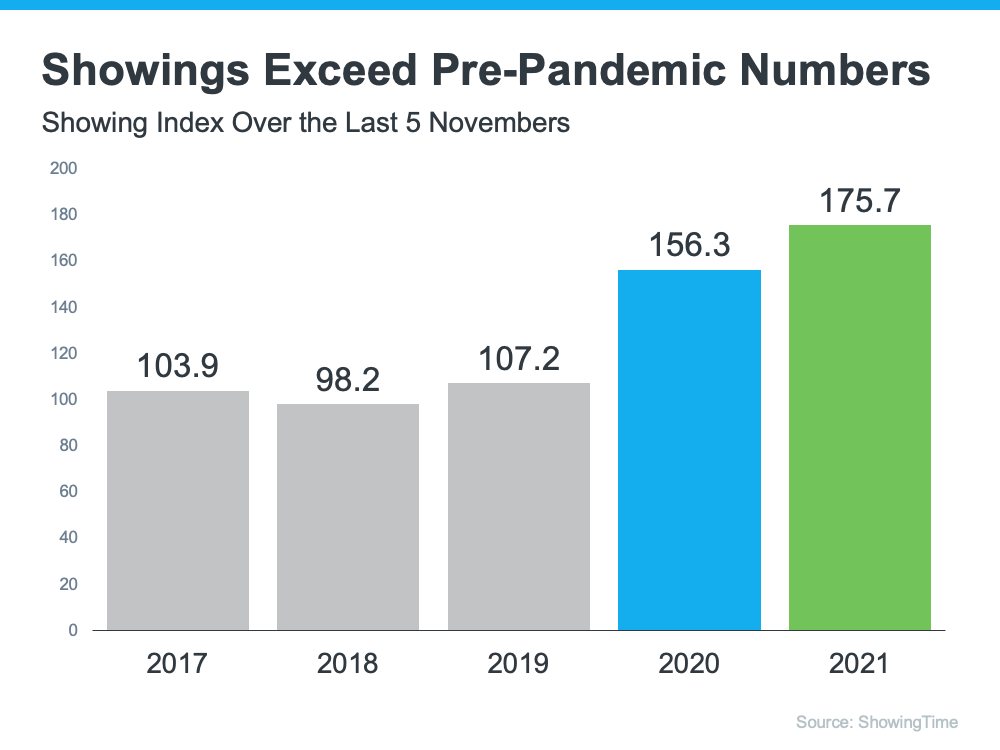
The ShowingTime Showing Index reports data from more than six million property showings scheduled across the country each month. In other words, it’s a gauge of how many buyers are out looking at homes at the current time.

The latest index, which covers November showings, reveals that buyers are still very active in the market. Comparing this November’s numbers to previous years, this graph shows that the index is higher than last year and much higher than the three years prior to the pandemic. Clearly, there’s an influx of buyers searching for your home.
Why Waiting To Sell Your House Could Cost You a Small Fortune | MyKCM

Also, at this time of year, only those purchasers who are serious about buying a home will be in the market. You and your loved ones won’t be inconvenienced by casual searchers. Freddie Mac addresses this in a recent blog:

“The buyers who are willing to house hunt in a winter market, when there are fewer options, are typically more serious. Plus, year-end bonuses and overtime payouts give people more purchasing power.”

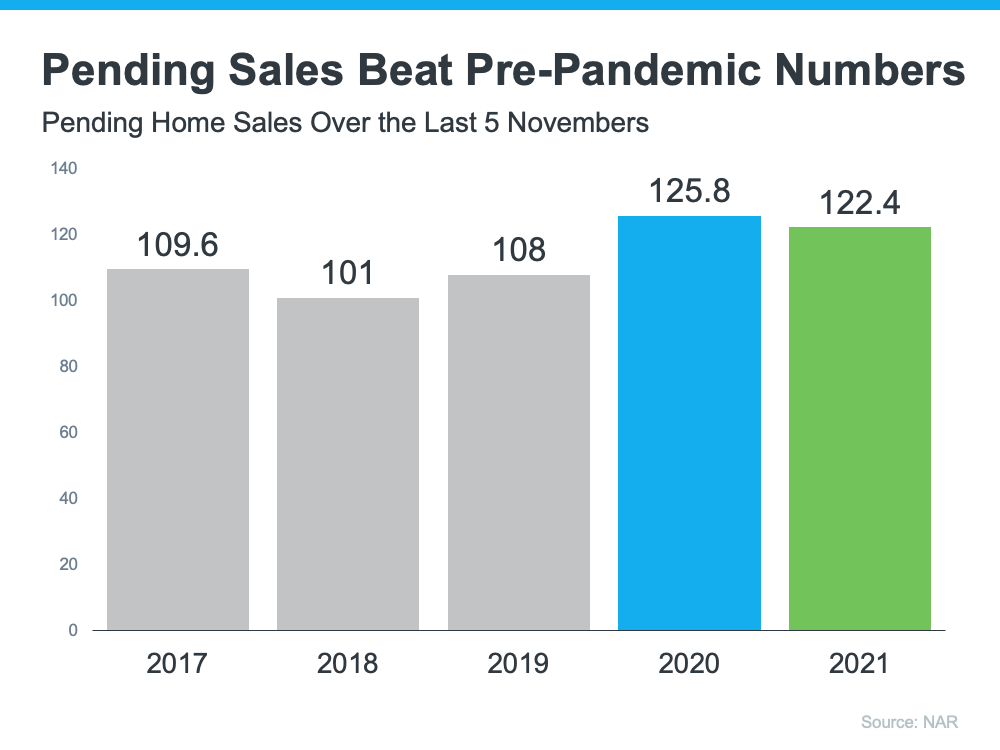
And that theory is proving to be true right now based on the number of buyers who have put a home under contract to purchase. The National Association of Realtors (NAR) publishes a monthly Pending Home Sales Index which measures housing contract activity. It’s based on signed real estate contracts for existing single-family homes, condos, and co-ops. The latest index shows:

“…housing demand continues to be high. . . . Homes placed on the market for sale go from ‘listed status’ to ‘under contract’ in approximately 18 days.”

Comparing the index to previous Novembers, while it’s slightly below November 2020 (when sales were pushed to later in the year because of the pandemic), it’s well above the previous three years.
Why Waiting To Sell Your House Could Cost You a Small Fortune | MyKCM

The takeaway for you: There are purchasers in the market, and they’re ready and willing to buy.

2. Other Sellers Plan To List Earlier This Year

The law of supply and demand tells us that if you want the best price possible and to negotiate your ideal contract terms, put your house on the market when there’s strong demand and less competition.

recent study by realtor.com reveals that, unlike in previous years, sellers plan to list their homes this winter instead of waiting until spring or summer. The study shows that 65% of sellers who plan to sell in 2022 have either already listed their home (19%) or are planning to put it on the market this winter.

Again, if you’re looking for the best price and the ability to best negotiate the other terms of the sale of your house, listing before this competition hits the market makes sense.

3. Newly Constructed Homes Will Be Your Competition in the Spring

In 2020, there were over 979,000 new single-family housing units authorized by building permits. Many of those homes have yet to be built because of labor shortages and supply chain bottlenecks brought on by the pandemic. They will, however, be completed in 2022. That will create additional competition when you sell your house. Beating these newly constructed homes to the market is something you should consider to ensure your house gets as much attention from interested buyers as possible.

4. There Will Never Be a Better Time To Move-Up

If you’re moving into a larger, more expensive home, consider doing it now. Prices are projected to appreciate by approximately 5% over the next 12 months. That means it will cost you more (both in down payment and mortgage payment) if you wait. You can also lock in your 30-year housing expense with a mortgage rate in the low 3’s right now. If you’re thinking of selling in 2022, you may want to do it now instead of waiting, as mortgage rates are forecast to rise throughout the year.

5. It May Be Time for You To Make a Change

Consider why you’re thinking of selling in the first place and determine whether it’s worth waiting. Is waiting more important than being closer to your loved ones now? Is waiting more important than your health? Is waiting more important than having the space you truly need?

Only you know the answers to those questions. Take time to think about your goals and priorities as we move into 2022 and consider what’s most important to act on now.

Bottom Line

If you’ve been debating whether or not to sell your house and are curious about market conditions in your area, let’s connect so you have expert advice on the best time to put your house on the market.


Not many more homes are expected to go up for sale

By Clare Trapasso
Dec 1, 2021

2 of a 3 part series
Highlights:

  • “The shortage of homes for sale, that has been more than a decade in the making, will keep home prices high,”
  • Millennials are a massive generation—next year, there will be more than 45 million millennials between the ages of 26 and 35, which are prime homebuying years.

Unfortunately, for frustrated buyers who have had trouble finding the right homes in the right locations at the right price, there isn’t expected to be a rush of homes hitting the market.

Realtor.com economists predict the number of homes for sale, which is hovering around record lows, will tick up only 0.3%. That’s partly due to builders having a tough time ramping up construction as they contend with shortages in workers and materials, compounded by the global supply chain backups. (Single-family housing starts, which is when builders start construction, is expected to rise only 5% next year.)

There are plenty of investors snapping up single-family homes and turning them into rentals. And there is no tidal wave of foreclosures expected to hit now that the government moratoriums are expiring.

There are also more homebuyers today than there are abodes for sale.

Millennials are a massive generation—next year, there will be more than 45 million millennials between the ages of 26 and 35, which are prime homebuying years. So there would need to be substantially more homes built to keep up with the needed housing—except builders stopped building during the Great Recession and there are fewer homes going up today.

“The shortage of homes for sale, that has been more than a decade in the making, will keep home prices high,” says Hale.

Sales will also continue to climb, hitting a 16-year high as they go up by 6.6%, Realtor.com economists anticipate. That’s partly because technology has sped up the homebuying process. Plus, buyers are jumping on whatever comes up for sale in record time before the property is snapped up by another eager buyer.

Attractively priced homes in good shape are expected to continue going under contract quickly.

“Homes are selling so much faster than they have in any previous [years],” says Hale.

That speed supports increased housing turnover as more abodes change hands as folks move into their first homes or relocate, trade up into larger residences, and downsize.

The popularity of the suburbs is also likely to endure. They emerged as the places to be during the pandemic as buyers could score more square footage and bigger yards for less money than in the bigger cities.

“For years, we heard about the dying suburbs because millennials didn’t want to live there, but as they age, guess where they’re heading?” asks Hale.

Some were even moving to the burbs before the pandemic.

“This budding trend was accelerated by the needs of aging millennials, often with families, trying to grapple head-on with the realities of doing more than ever before from home,” says Hale.

Remote work will also likely be a factor. With more workers telecommuting or going into the office only a few times a week, they don’t have to contend with grueling commutes five days a week. Many are more comfortable moving farther outside of the cities where they can get larger abodes with room for a home office at an attractive price.

That’s likely to keep prices high in desirable communities.

“Shoppers were looking for affordable homes with space that could be used flexibly to accommodate working, schooling, exercising, cooking, and all of the other living and relaxing we used to take for granted,” says Hale.

It won’t be easy for first-time homebuyers

First-time buyers are likely to continue struggling to compete with the offers over the asking price and win the bidding wars.

The ace in their pocket is the work-from-home phenomenon that has allowed many white-collar professionals to work from anywhere they have a strong Wi-Fi connection. So they may be able to relocate to cheaper destinations that make up for what they lack in Michelin star restaurants with more affordable home prices.

“Maybe they’re not buying a home in or near a major city where prices are high and the market is still competitive,” says Hale. “But they can move farther away from the city to the suburbs or to an entirely new city where it’s more affordable.”

The savings many who held on to their jobs were able to amass early on in the pandemic—when the stimulus checks went out and many folks cut back on dining out and traveling—may help them with the down payments. Some buyers temporarily moved back home with families or doubled up with friends to save on housing costs as well.

“I know a lot of people are expecting housing prices and sales to peak and then decline. Instead, I think there’s enough momentum from these younger buyers who want to get into the housing market to keep sales moving forward,” says Hale. “They are going to succeed because that drive to buy a home and make it happen when you’re ready is really strong.”


Will Home Prices and Rents Finally Fall? Our Bold Predictions on Real Estate in 2022

By Clare Trapasso
Dec 1, 2021

1 of a 3 part series
Highlights:

  • Prices will stay high, inventory will remain tight, and mortgage rates will rise
  • Prices aren’t anticipated to come down from the highs
  • “The pace of price growth is going to slow notably, bringing it more in line with buyers’ incomes”

Here’s what we already know: Since the COVID-19 pandemic began, the real estate market has been on a wild ride of unprecedented highs and lows—record-high home prices on one side, record-low mortgage rates and available homes for sale on the other. It’s been a time of overwhelming stress for many, gigantic profits for some, and great disorientation for most of us.

Now the housing experts say the market is “normalizing.” But what does that mean? Will home prices and rents finally come down? Will more homes go up for sale? And what does the year ahead have in store for the real estate market?

The Realtor.com® 2022 housing forecast anticipates the market will continue slowing down from the frenzy seen in the spring when prices shot up to new heights. However, prices will stay high, inventory will remain tight, and mortgage rates will rise.

The bottom line: Even as the market calms down further, it’s still expected to be challenging for buyers, especially those purchasing their first homes.

“The 2022 housing market will continue to be a seller’s market with fast-moving homes and rising prices,” says Realtor.com Chief Economist Danielle Hale. “But the competition should be a bit less intense than we’ve seen recently.”

Home prices will stay high, but price growth will continue slowing

Home prices aren’t expected to keep zooming up into the stratosphere in 2022 the way they did this year. So buyers can breathe at least a shallow sigh of relief. Instead, Realtor.com economists anticipate they’ll increase at a much slower rate of just 2.9% over this year compared with an anticipated 12% rise in 2021.

This means the double-digit price growth that confounded buyers earlier this year is expected to taper off.

However, prices aren’t anticipated to come down from the highs they reached this year due to the continuing shortage of properties for sale and hordes of buyers continuing to enter the market. They just won’t go up so much as quickly.

“Price growth is expected to move back toward a normal range, but this is on top of recent high prices,” says Hale. “So prices will [still] hit new highs.”

While that’s not great news for buyers, homes aren’t expected to cost much more than they did just a few months ago.

“The pace of price growth is going to slow notably, bringing it more in line with buyers’ incomes,” says Hale. “With prices high and mortgage rates beginning to tick up, people won’t be able to be as aggressive in what they’re willing to pay.”