83% of Outstanding Mortgage Debt Has a Sub-6% Rate

Realtor.com – Hannah Jones – Jan 10, 2025

After roughly four months of improving mortgage rates, the tides have turned and rates are near 7% once again. Rates reached a recent low of 6.08% in late September, before climbing up to 6.9% in the most recent week. Mortgage rates have remained above 6% since September 2022, keeping many would-be sellers “locked in“ and hindering total inventory recovery. 

Housing supply has improved over the past year but remains below pre-pandemic levels. Scarce inventory has kept upward pressure on home prices, especially in affordable areas where homes continue to sell at a quick clip and buyers face considerable competition. New-construction inventory has helped fill the gap, and the new-home share of inventory has climbed beyond pre-pandemic levels. As a result, new-home sales climbed annually for the majority of months in the past couple of years.

In the third quarter of 2024, 21.3% of outstanding mortgages had an interest rate below 3%. The Freddie Mac fixed rate on a 30-year loan dipped below 3% in July 2020, and generally stayed below the 3% threshold through September 2021. Highlighting how extraordinary these conditions were, this was the only period in the data’s history (since 1971) where rates dropped below this threshold.

Outstanding Mortgage RateShare of Mortgages (2024 Q3)Cumulative Share
< 3%21.3%21.3%
3% to 4%33.9%55.2%
4% to 5%18.1%73.3%
5% to 6%9.5%82.8%
6% +17.2%100%

Roughly a third (33.9%) of outstanding mortgages have an interest rate between 3% and 4%, 18.1% have a rate between 4% and 5%, 9.5% have a rate between 5% and 6%, and 17.2% have a rate of 6% or greater.

Altogether, this means that more than half of outstanding mortgages have a rate of 4% or lower, and roughly three-quarters have a rate of 5% or lower. Looking at the year ahead, we expect that by the end of 2025, the share of mortgages below 6% could fall close to 75%. Put differently, we expect the share of mortgage holders with a rate of 6% or higher to increase by roughly 8 percentage points.

The share of homeowners holding a mortgage with a rate of 6% or higher increased nearly 5 percentage points between Q3 2023 and Q3 2024 as buyer activity carried on, despite high rates. Even in today’s high-price, high-rate market, homebuying activity around big life events (kids, marriage, divorce, etc.) keeps the market in motion. Though the lock-in effect continues to affect the market, a recent survey revealed that a sizable 40% of potential buyers would find a home purchase feasible if mortgage rates were to drop below 6%, and 32% of buyers would be willing to participate if rates dropped below 5%.  Easing inflation and mortgage rates will be key drivers of seller activity, which will relieve some of the price pressure and competition felt in today’s under-supplied market


Local Real Estate Insights: Impact on Home Prices

If you’re wondering what’s going on with home prices lately, you’re definitely not the only one. With so much information out there, it can be hard to figure out your next move.

As a buyer, you might be worried about paying more than you should. And if you’re thinking of selling, you might be concerned about not getting the price you’re aiming for. 

So, here’s a quick breakdown to help clear things up and show you what’s really happening with prices—whether you’re thinking about buying or selling

Home Price Growth Is Slowing, but Prices Aren’t Falling Nationally

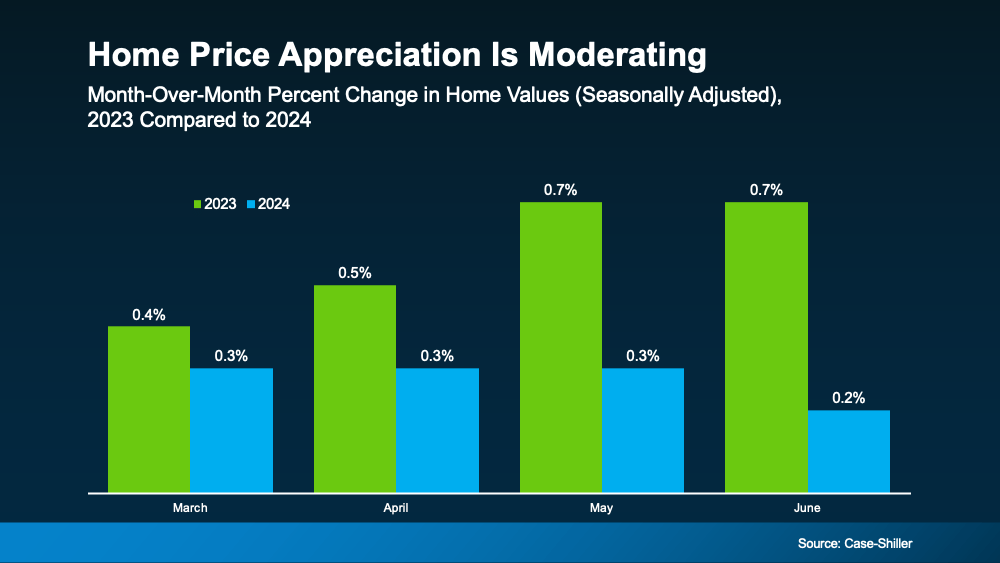
Throughout the country, home price appreciation is moderating. What that means is, prices are still going up, but they’re not rising as quickly as they were in recent years. The graph below uses data from Case-Shiller to make the shift from 2023 to 2024 clear:


But rest assured, this doesn’t mean home prices are falling. In fact, all the bars in this graph show price growth. So, while you might hear talk of prices cooling, what that really means is they’re not climbing as fast as they were when they skyrocketed just a few years ago.

What’s Next for Home Prices? It’s All About Supply and Demand 

You might be curious where prices will go from here. The answer depends on supply and demand, and it’s going to vary by local market.

Nationally, the number of homes for sale is going up, but there still aren’t enough of them to meet today’s buyer demand. That’s keeping upward pressure on prices – even though recent inventory growth has caused that home price appreciation to slow. Danielle Hale, Chief Economist at Realtor.comsaid:

“. . . today’s low but quickly improving for-sale inventory has ushered in more market balance than would otherwise be expected . . . This should help home prices maintain a slower pace of growth.” 

And here’s one other thing you may not have considered that could play a role in where prices go from here. Since experts say mortgage rates should continue to decline, it’s likely more buyers will re-enter the market in the months ahead. If demand picks back up, that could make prices climb a bit further.

Why You Should Work with a Local Real Estate Agent 

While national trends give a big-picture view, real estate is always local – especially when it comes to prices. What’s happening in your neighborhood might be different from the national average based on what supply and demand look like in your market. That’s why it’s crucial to get local insights from a knowledgeable real estate agent.

 As your go-to source for everything related to home prices, a local agent can provide the most current data and trends specific to your area.

So, if you’re planning to sell, they can help you price your house accurately. And when you’re ready to buy, they can find the right home that fits your budget and your needs.

Bottom Line

Home prices are still rising, just not as quickly as before. Whether you’re thinking about buying, selling, or just curious about what your house is worth, let’s connect so you have the personalized guidance you need.