Local Real Estate Insights: Impact on Home Prices

If you’re wondering what’s going on with home prices lately, you’re definitely not the only one. With so much information out there, it can be hard to figure out your next move.

As a buyer, you might be worried about paying more than you should. And if you’re thinking of selling, you might be concerned about not getting the price you’re aiming for. 

So, here’s a quick breakdown to help clear things up and show you what’s really happening with prices—whether you’re thinking about buying or selling

Home Price Growth Is Slowing, but Prices Aren’t Falling Nationally

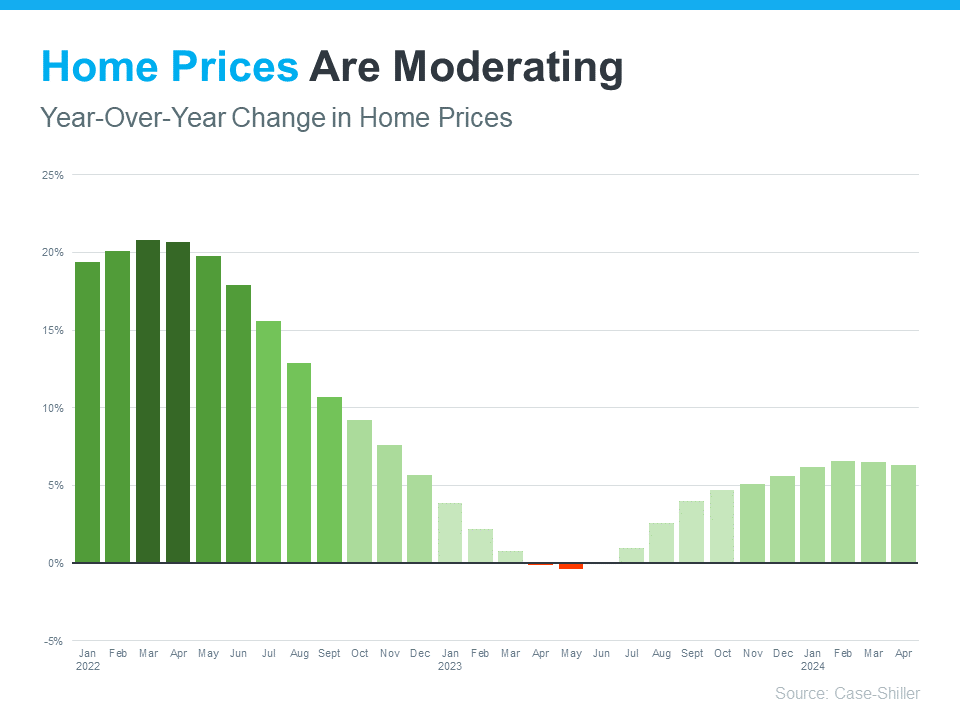
Throughout the country, home price appreciation is moderating. What that means is, prices are still going up, but they’re not rising as quickly as they were in recent years. The graph below uses data from Case-Shiller to make the shift from 2023 to 2024 clear:
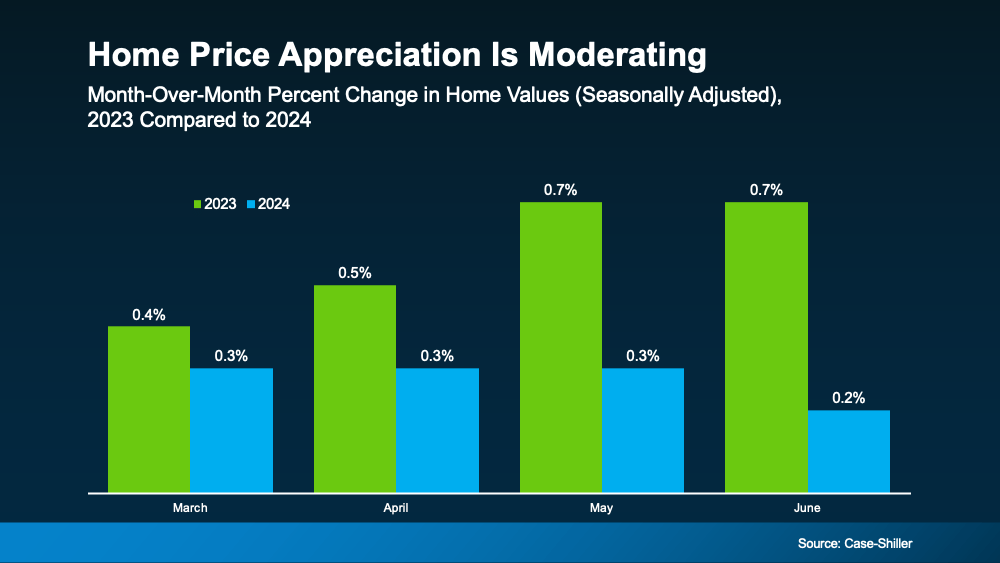

But rest assured, this doesn’t mean home prices are falling. In fact, all the bars in this graph show price growth. So, while you might hear talk of prices cooling, what that really means is they’re not climbing as fast as they were when they skyrocketed just a few years ago.

What’s Next for Home Prices? It’s All About Supply and Demand 

You might be curious where prices will go from here. The answer depends on supply and demand, and it’s going to vary by local market.

Nationally, the number of homes for sale is going up, but there still aren’t enough of them to meet today’s buyer demand. That’s keeping upward pressure on prices – even though recent inventory growth has caused that home price appreciation to slow. Danielle Hale, Chief Economist at Realtor.comsaid:

“. . . today’s low but quickly improving for-sale inventory has ushered in more market balance than would otherwise be expected . . . This should help home prices maintain a slower pace of growth.” 

And here’s one other thing you may not have considered that could play a role in where prices go from here. Since experts say mortgage rates should continue to decline, it’s likely more buyers will re-enter the market in the months ahead. If demand picks back up, that could make prices climb a bit further.

Why You Should Work with a Local Real Estate Agent 

While national trends give a big-picture view, real estate is always local – especially when it comes to prices. What’s happening in your neighborhood might be different from the national average based on what supply and demand look like in your market. That’s why it’s crucial to get local insights from a knowledgeable real estate agent.

 As your go-to source for everything related to home prices, a local agent can provide the most current data and trends specific to your area.

So, if you’re planning to sell, they can help you price your house accurately. And when you’re ready to buy, they can find the right home that fits your budget and your needs.

Bottom Line

Home prices are still rising, just not as quickly as before. Whether you’re thinking about buying, selling, or just curious about what your house is worth, let’s connect so you have the personalized guidance you need.


Are We Heading into a Balanced Market?

If you’ve been keeping an eye on the housing market over the past couple of years, you know sellers have had the upper hand. But is that going to shift now that inventory is growing? Here’s a breakdown of what you need to know.

What Is a Balanced Market?

A balanced market is generally defined as a market with about a five-to-seven-month supply of homes available for sale. In this type of market, neither buyers nor sellers have a clear advantage. Prices tend to stabilize, and there’s a healthier number of homes to choose from. And after many years when sellers had all the leverage, a more balanced market would be a welcome sight for people looking to move. The question is – is that really where the market is headed?

After starting the year with a three-month supply of homes nationally, inventory has increased to four months. That may not sound like a lot, but it means the market is getting closer to balanced – even though it’s not quite there yet. It’s important to note this increase in inventory is not leading to an oversupply that would cause a crash. Even with the growth lately, there’s still nowhere near enough supply for that to happen.

The graph below uses data from the National Association of Realtors (NAR) to give you an idea of where inventory has been in the past, and where it’s at today:

For now, this is still seller’s market territory – it’s just not as frenzied of a seller’s market as it’s been over the past few years. As Mark Fleming, Chief Economist at First Americansays:

“The faster housing supply increases, the more affordability improves and the strength of a seller’s market wanes.”

What This Means for You and Your Move

Here’s how this shift impacts you and the market conditions you’ll face when you move. Lawrence Yun, Chief Economist at NAR, explains:

“Homes are sitting on the market a bit longer, and sellers are receiving fewer offers. More buyers are insisting on home inspections and appraisals, and inventory is definitively rising on a national basis.”

The graphs below use the latest data from NAR and Realtor.com to help show examples of these changes:

Homes Are Sitting on the Market Longer: Since more homes are on the market, they’re not selling quite as fast. For buyers, this means you may have more time to find the right home. For sellers, it’s important to price your house right if you want it to sell. If you don’t, buyers might choose better-priced options.

Sellers Are Receiving Fewer Offers: As a seller, you might need to be more flexible and willing to compromise on price or terms to close the deal. For buyers, you could start to face less intense competition since you have more options to choose from.

Fewer Buyers Are Waiving Inspections: As a buyer, you have more negotiation power now. And that’s why fewer buyers are waiving inspections. For sellers, this means you need to be ready to negotiate and address repair requests to keep the sale moving forward.

How a Real Estate Agent Can Help

But this is just the national picture. The type of market you’re in is going to vary a lot based on how much inventory is available. So, lean on a local real estate agent for insight into how your area stacks up.

Whether you’re buying or selling, understanding how the market is changing gives you a big advantage. Your agent has the latest data and local insights, so you know exactly what’s happening and how to navigate it.

Bottom Line

The real estate market is always changing, and it’s important to stay informed. Whether you’re buying or selling, understanding this shift toward a balanced market can help. If you have any questions or need expert advice, don’t hesitate to reach out.


The Number One Mistake Sellers Are Making: Overpricing Their House

In today’s housing market, many sellers are making a critical mistake: overpricing their houses. This common error can lead to a home sitting on the market for a long time without any offers. And when that happens, the homeowner may have to drop their asking price to try to re-ignite buyer interest.

Data from Realtor.com shows the number of homeowners realizing this mistake and doing a price reduction is climbing (see graph below):

If you’re thinking about making a move yourself, here’s what you need to know. The best way to avoid making a costly mistake is to work with a trusted real estate agent to find the right price. Here’s a look at what’s at stake if you don’t.

Not Paying Attention To Current Market Conditions

Understanding current market conditions is key to accurate pricing. You don’t want to set your asking price based on what happened during the pandemic. The market has moderated a lot since then, so it’s far better to align your price with today’s reality.

Real estate agents stay updated on market trends and how they impact the pricing strategy for your house.

Pricing It Based on What You Want To Make (Not What It’s Worth)

Another misstep is pricing it based on what you want to make on the sale, and not necessarily current market value. You may see other homes in your neighborhood selling for top dollar and assume yours can do the same. But you may not be considering differences in size, condition, and features. For example, maybe that other house is waterfront or has a finished basement. To sum it up, Bankrate explains:

“How do you find that sweet spot of pricing for profit but not overpricing? The expertise of your agent can be truly valuable here. A knowledgeable agent will understand fair market value in your area, how much your house is worth and how much you might reasonably expect to get for it in the current market.”

An agent will do a comparative market analysis (CMA) to make sure your house is compared with truly similar properties to get an accurate look at how it should be priced.

Pricing High to Leave Room for Negotiation

Another common, yet misguided strategy is to price your house high on purpose, so you have more room to negotiate down during the sale. But this can backfire. A price that seems too high often deters potential buyers from even considering the home. So rather than leaving room for negotiation, what you’ll actually be doing is turning buyers away. U.S. News Real Estate explains:

“You want to sell your house for top dollar, but be realistic about the value of the property and how buyers will see it. If you’ve overpriced your home, chances are you’ll eventually need to lower the number, but the peak period of activity that a new listing experiences is already gone.”

An agent can help you set a fair price that attracts buyers and encourages more competitive offers.

Bottom Line

Overpricing your home can have serious consequences. A knowledgeable real estate agent brings an objective perspective, in-depth market knowledge, and a strategic approach to pricing.

Let’s connect so you can avoid making a pricing mistake that’ll cost you.


What Every Homeowner Should Know About Their Equity

Curious about selling your home? Understanding how much equity you have is the first step to unlocking what you can afford when you move. And since home prices rose so much over the past few years, most people have much more equity than they may realize.

Here’s a deeper look at what you need to know if you’re ready to cash in on your investment and put your equity toward your next home.

Home Equity: What Is It and How Much Do You Have?

Home equity is the difference between how much your house is worth and how much you still owe on your mortgage. For example, if your house is worth $400,000 and you only owe $200,000 on your mortgage, your equity would be $200,000.

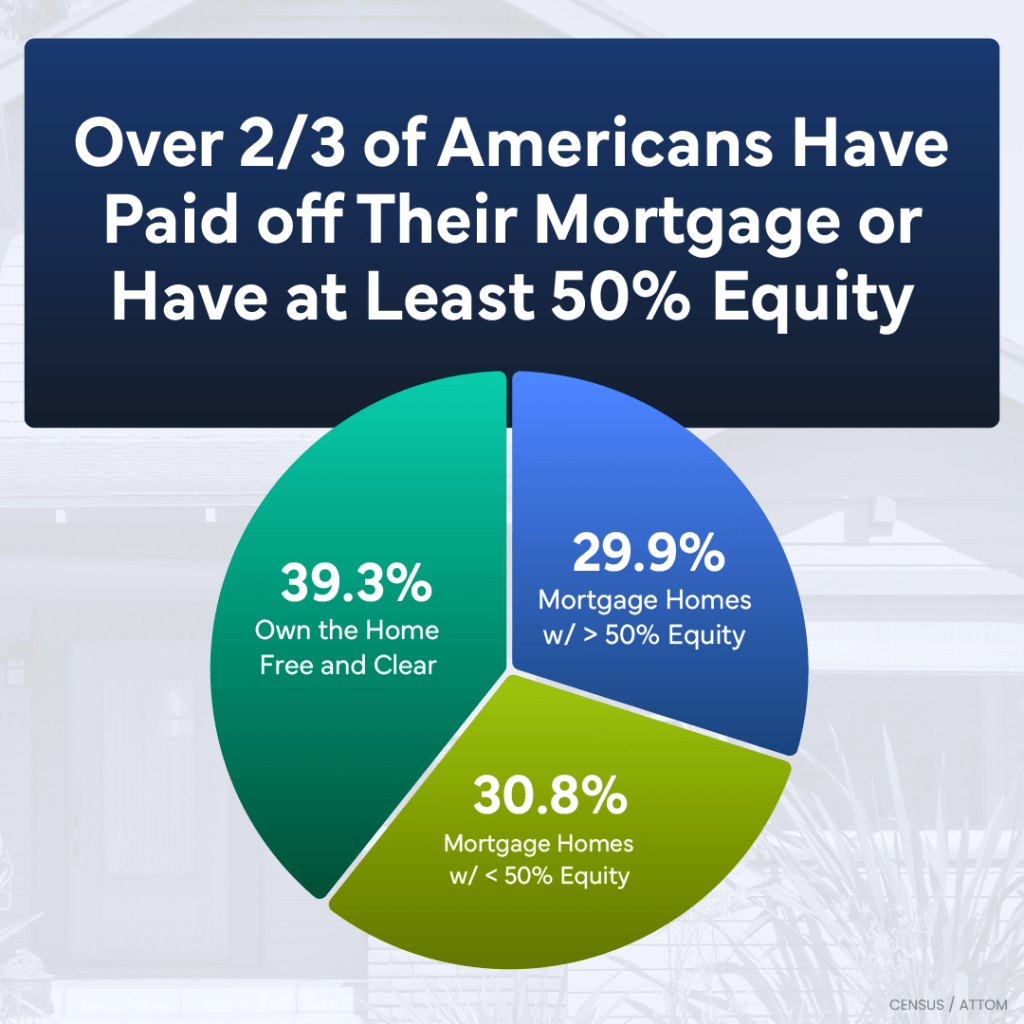
Recent data from the Census and ATTOM shows Americans have significant equity right now. In fact, more than two out of three homeowners have either completely paid off their mortgages (shown in green in the chart below) or have at least 50% equity in their homes (shown in blue in the chart below):

Today, more homeowners are getting a larger return on their homeownership investments when they sell. And if you have that much equity, it can be a powerful force to fuel your next move.

What You Should Do Next

If you’re thinking about selling your house, it’s important to know how much equity you have, as well as what that means for your home sale and your potential earnings. The best way to get a clear picture is to work with your agent, while also talking to a tax professional or financial advisor. A team of experts can help you understand your specific situation and guide you forward.

Bottom Line

Home prices have gone up, which means your equity probably has too. Let’s connect so you can find out how much you have in your home and move forward confidently when you sell.


Unlocking Homebuyer Opportunities in 2024

There’s no arguing this past year has been difficult for homebuyers. And if you’re someone who has started the process of searching for a home, maybe you put your search on hold because the challenges in today’s market felt like too much to tackle. You’re not alone in that. A Bright MLS study found some of the top reasons buyers paused their search in late 2023 and early 2024 were:

  • They couldn’t find anything in their price range
  • They didn’t have any successful offers or had difficulty competing
  • They couldn’t find the right home

If any of these sound like why you stopped looking, here’s what you need to know. The housing market is in a transition in the second half of 2024. Here are four reasons why this may be your chance to jump back in.

1. The Supply of Homes for Sale Is Growing

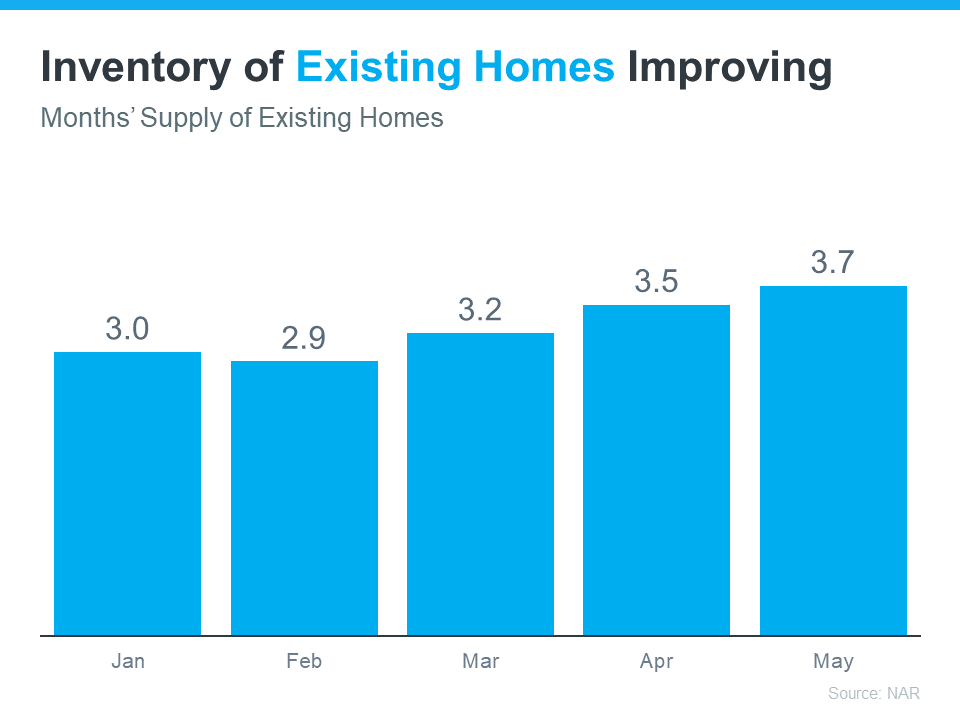
One of the most significant shifts in the market this year is how the months’ supply of homes for sale has increased. If you look at data from the National Association of Realtors (NAR), you’ll see how inventory has grown throughout 2024 (see graph below):

No Caption Received

This graph shows the months’ supply of existing homes – homes that were previously lived in by another homeowner. The upward trend this year is clear.

This increase means you have a better chance of finding a home that suits your needs and preferences. And if the biggest reason you put off your home search was difficulty finding the right home, this is a big relief.

2. There’s More New Home Construction

And if you still don’t see an existing home you like, another big opportunity lies in the rise of new home construction. Builders have worked to increase the supply of newly built homes this year. And they’ve turned their attention to crafting smaller, more affordable homes based on what’s most needed in today’s market. This helps address the long-standing issue of housing undersupply throughout the country, and those smaller homes also offset some of the affordability challenges you’re feeling today.

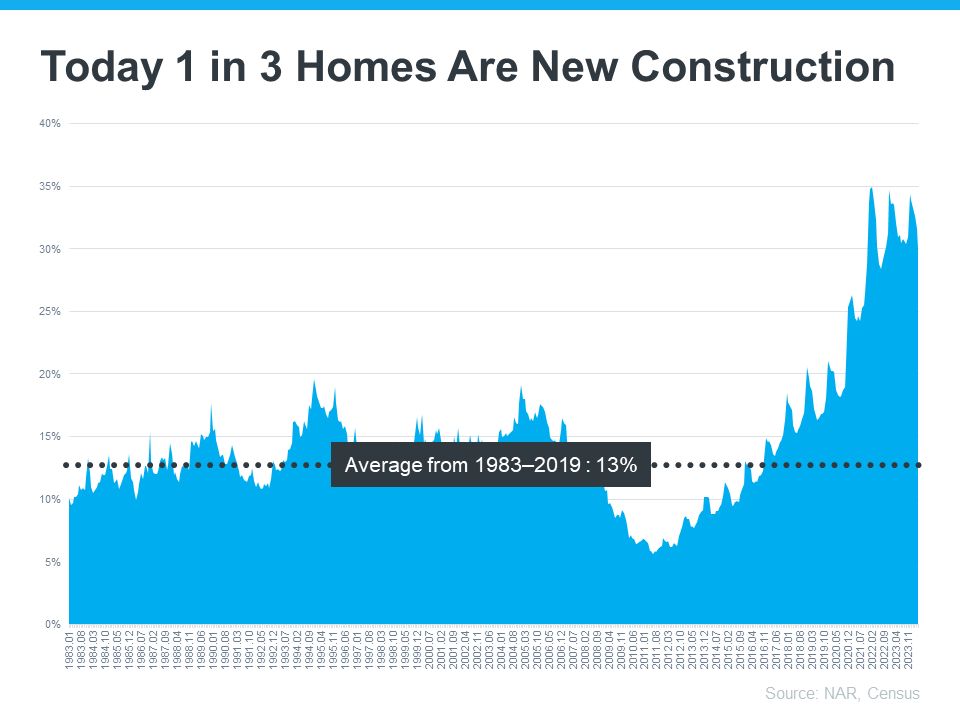
According to data from the Census and NAR, one in three homes on the market is a newly built home (see graph below):

No Caption Received

This means, that if you didn’t previously look at newly built homes as part of your search, you may have been cutting your pool of options by a third. Not to mention, some builders are also offering incentives like buying down mortgage rates to make it easier for buyers to get a home that fits their budget.

So, consider talking to your agent about what builders have to offer in your area. Your agent’s expertise on builder reputations, contracts, and more will help you weigh your options.

3. Less Buyer Competition

Mortgage rates are still hovering around 7%, so buyer demand isn’t as fierce as it once was. And when you combine that with more housing supply, you have a better chance of avoiding an intense bidding war. Danielle Hale, Chief Economist at Realtor.com, highlights the positive trend for the latter half of 2024, saying:

Home shoppers who persist could see better conditions in the second half of the year, which tends to be somewhat less competitive seasonally, and might be even more so since inventory is likely to reach five-year highs.”

This creates a unique opportunity for you to find a home you want to buy with less stress and at a potentially better price.

4. Home Prices Are Moderating

Speaking of prices, home prices are also showing signs of moderation – and that’s a welcome shift after the rapid appreciation seen in recent years (see graph below):

No Caption Received

This moderation is mostly due to supply and demand. Supply is growing and demand is easing, so prices aren’t rising as fast. But make no mistake, that doesn’t mean prices are falling – they’re just rising at a more normal pace. You can see this in the graph. The bars are still showing prices increasing, just not as dramatic as it was before.

The average forecast for home price appreciation in 2024 is for positive growth around 3% to 5%, which is more in line with historical norms. That moderation means that you are less likely to face the steep price increases we saw a few years ago.

The Opportunity in Front of You

If you’re ready and able to buy, you may find that the second half of 2024 is a bit easier to navigate. There are still challenges, but some of the biggest hurdles you’ve faced are getting better as time wears on.

On the other hand, you could choose to wait. But if you do, here’s the risk you run. As more buyers recognize the shift in the market, competition will grow again. On a similar note, if mortgage rates do come down (as forecasts say), more buyers will flood back into the market. So, making a move now helps you take advantage of the current market conditions and get ahead of those other buyers.

Bottom Line

If you’ve put your dream of homeownership on hold, the second half of 2024 may be your chance to jump back in. Let’s connect to talk more about the opportunities you have in today’s market.


Nationally and some Florida Cities See Jump in Active Listings

new home owners receiving keys

courtneyk, iStock, Getty Images
MARCH 18, 2024

In Florida and nationwide, the housing supply is rebounding as sellers get used to elevated mortgage rates and the lock-in effect eases, Redfin found.

MIAMI – Active listings, or the total supply of homes for sale, in Cape Coral, North Port and Fort Lauderdale saw the biggest jump in the nation in February, the real estate brokerage firm Redfin reported. Nationwide, active listings climbed 0.8% from a month earlier on a seasonally adjusted basis and were little changed (-0.1%) from a year earlier — the smallest annual decline in months.

Nationally, new listings jumped 3.8% month over month on a seasonally adjusted basis in February to the highest level since September 2022. They were up 14.8% year over year, the largest annual gain since May 2021. In Florida, condo listings were the driving force contributing to the jump in supply amid a surge in HOA and insurance fees.

“The housing market is nothing like it was two years ago during the pandemic homebuying frenzy, but it’s better than it was last year. It’s coming back,” said David Palmer, a Redfin agent in Seattle. “Sellers who were on the fence in 2023 are now listing. They’re more used to elevated rates now. There still aren’t enough listings to quench pent-up buyer demand, but it’s getting better.”

Nationwide, housing supply is on the rise because the “lock-in effect” is easing; eventually, homeowners who have been holding on to their ultra-low mortgage rates simply have to move.

“February was a mixed bag for the housing market and the economy,” said Redfin Economics Research Lead Chen Zhao. “Housing supply is finally starting to recover in a meaningful way, which is great news for buyers who for months have been competing for a tiny pool of homes for sale. Still, many house hunters are hesitant to pull the trigger because mortgage rates and home prices remain elevated.”

Mortgage-purchase applications slid in February as mortgage rates ticked back up after dropping in December. The average 30-year-fixed mortgage rate was 6.78% in February up from 6.64% in January.

At the same time, prices continue to rise because, despite the recent uptick in listings, there’s still not enough supply to meet demand, Redfin said. Both new listings and active listings remained far below pre-pandemic levels in February.

“If you price your home reasonably, buyers will show up. If you don’t, buyers will wait for you to drop the price,” Palmer said. “I recently listed an estate sale fixer upper for $550,000 and it got 14 offers, sold for $75,000 over the asking price and the buyer waived every contingency.”

read full article

© 2024 Florida Realtors®


Fannie Mae building sign

Courtesy Fannie Mae

JANUARY 22, 2024

Fannie Mae: 2024 Mortgage Rates to Dip Below 6%

By Amy Connolly

“Overall, we expect 2024 to be a better year than 2023 for homebuyer affordability and the mortgage industry,” Fannie Mae’s chief economist said.

WASHINGTON – The housing market will begin a gradual return to a “more normal balance” in 2024, and mortgage rates are expected to end the year below 6%, Fannie Mae analysts said.

Fannie Mae’s Economic and Strategic Research (ESR) Group said the lower rate environment should boost refinance volumes, which are already on the upswing. Lower rates are also likely to loosen the so-called lock-in effect that’s had a stronghold on the market.

“In fact, the ESR Group expects the annualized pace of existing home sales to move up to 4.5 million units by the fourth quarter of 2024, compared to 3.8 million in Q4 2023,” Fannie Mae analysts said in the January report. “However, a full recovery to the pre-pandemic sales rate is expected to take years, as housing affordability remains stretched extremely thin by historical standards relative to household incomes.”

At the same time, housing supply shortages and affordability constraints will continue to bolster the market for new single-family homes, with 2024 starts and new home sales forecast to top 2023 levels.

The ESR Group also said home prices are expected to rise 3.2% over the year, compared to 7.1% in 2023. While the latest forecast continues to project a slowdown in economic growth in 2024, the ESR Group anticipates a brighter economic backdrop compared to previous months, replacing its call for a modest recession with positive-but-below-trend growth in 2024.

The ESR Group noted the rapid recent easing in financial conditions, the Federal Reserve’s December meeting and the solid, upward trend in real personal income growth in October and November as positive impulses for growth over the coming quarters. But, the group said, the economy still faces a higher-than-normal risk of recession.

“Inflation’s decline and the resultant Fed pivot to signaling future rate cuts rates lead us to believe that home sales and mortgage originations likely bottomed out in the second half of 2023 and that a gradual improvement is now underway,” Doug Duncan, Fannie Mae senior vice president and chief economist, said.

“We expect mortgage rates to dip below 6% by year-end 2024 and for homebuilders to continue to add new supply, both of which should aid affordability. Additionally, the decline in mortgage rates is likely to push refinancing volumes upward, along with some pickup in purchase financing. However, even at less than 6 percent, we think rates will still have a significant way to go in order to meaningfully reduce the ‘lock-in effect’ experienced by homeowners who refinanced or bought during the pandemic. Overall, we expect 2024 to be a better year than 2023 for homebuyer affordability and the mortgage industry.”

© 2024 Florida Realtors®


Average Long-Term Mortgage Rates Dip for 9th Straight Week

calculator with key on keyring with house on paperwork that says mortgage

DECEMBER 29, 2023 By Matt Ott

Freddie Mac says mortgage rates slid to the lowest level since May, “economy remains on firm ground with solid growth.”

WASHINGTON (AP) – The average long-term U.S. mortgage rate retreated for the ninth week to reach its lowest level since May.

The average rate on a 30-year mortgage dipped to 6.61% from 6.67% last week, mortgage buyer Freddie Mac said Thursday. A year ago, the rate averaged 6.42%.

Borrowing costs on 15-year fixed-rate mortgages, popular with homeowners refinancing their home loans, also inched down this week, with the average rate falling to 5.93% from 5.95% last week. A year ago, it averaged 5.68%, Freddie Mac said.

“Heading into the new year, the economy remains on firm ground with solid growth, a tight labor market, decelerating inflation, and a nascent rebound in the housing market,” Sam Khater, Freddie Mac’s chief economist.

Mortgage rates have been easing since late October, when the average rate on a 30-year home loan reached 7.79%, the highest level since late 2000.

The decline has tracked the trajectory of the 10-year Treasury yield, which lenders use as a guide to pricing loans. The yield, which in mid-October surged to its highest level since 2007, has been falling on hopes that inflation has cooled enough for the Federal Reserve to shift to cutting interest rates after yanking them dramatically higher since March of 2022.

The Fed has opted to not move rates at its last three meetings, which has also given financial markets a boost.

Investors’ expectations for future inflation, global demand for U.S. Treasurys and what the Fed does with its benchmark federal funds rate can influence rates on home loans.

The sharp run-up in mortgage rates that began early last year has pushed up borrowing costs on home loans, reducing how much would-be homebuyers can afford even as home prices have kept climbing due to a stubbornly low supply of properties on the market. That’s weighed on sales of previously occupied U.S. homes, which are down 19.3% through the first 11 months 2023.

Despite the recent decline, the average rate on a 30-year home loan remains sharply higher than just two years ago, when it was 3.11%. The large gap between rates now and then contributes to the low inventory of homes for sale by discouraging homeowners who locked in rock-bottom rates two years ago from selling.

Some housing economists are forecasting that home sales will increase next year, assuming that mortgage rates ease further.

© 2023 The Associated Press. All rights reserved. This material may not be published, broadcast, rewritten or redistributed without permission.


Latest Data Shows Home Prices, Rates May Improve

Bar chart with arrows and houses

NOVEMBER 17, 2023

Freddie Mac Chief Economist: “New data indicate inflationary pressures are receding” – which, along with lower mortgage rates, may lure more homebuyers into the market.

JONESBORO, Ga. – Mortgage rates have fallen for three straight weeks, with the 30-year fixed rate averaging 7.44% Thursday, down from 7.5% a week earlier, according to Freddie Mac.

But the rate remains well above last year’s level – 6.61%.

Why did the rate go down this week? “New data indicate that inflationary pressures are receding,” said Sam Khater, Freddie Mac’s chief economist.

The government reported Nov. 14 that consumer prices climbed 3.2% in the 12 months ended in October, decelerating from 3.7% in September.

“The combination of continued economic strength, lower inflation and lower mortgage rates should likely bring more potential homebuyers into the market,” Khater said.

Housing sales slump

But so far this year, high mortgage rates have stifled sales.

Existing-home sales slid 2% in September from August, according to the National Association of Realtors (NAR). Sales retreated 15.4% from a year ago.

“As has been the case throughout this year, limited inventory and low housing affordability continue to hamper home sales,” said NAR Chief Economist Lawrence Yun.

But with inventory limited, demand has been strong enough, despite the mortgage rate increase, to push home prices higher. The median existing-home price registered $394,300 in September, up 2.8% from $383,500 a year earlier.

“Lack of inventory is providing the support for high prices, but it’s also making it super difficult for first-time buyers to enter the housing market,” Yun noted.

Yun expects the depressed state of sales to last through year-end, with home sales dropping 18% for 2023 as a whole. That comes after a 17% decline last year.

Light at the end of the tunnel?

But things are starting to look up on the supply side. The inventory of unsold existing homes climbed 2.7% in September from August to 1.13 million. That’s the equivalent of 3.4 months’ supply at the current monthly sales pace. Six months is typically considered a balanced market.

“Builders are back on their feet, up 5% in newly constructed home sales year to date,” Yun said. “Builders can simply create inventory. In a housing shortage environment, builders are really benefiting.”

And mortgage rates may have topped out. Many economists believe inflation is falling enough to keep the Federal Reserve from raising rates again.

“I believe we’ve already reached the peak in terms of interest rates,” Yun said. “The question is when are rates going to come down?”

He forecast mortgage rates will slide to 6%-7% by the spring buying season and anticipates that more sellers will then enter the market.

Still, if you’re a renter who wants to buy, you might want to hold off until housing prices correct. For many, mortgage payments are just too high for a house to be affordable. The rule of thumb is that no more than 28% of your income should be needed to pay a mortgage.

Copyright © 2023 Clayton News Daily. All rights reserved.


Homeowner Net Worth Has Skyrocketed

If you’re weighing your options to decide whether it makes more sense to rent or buy a home today, here’s one key data point that could help you feel more confident in making your decision. Every three years, the Federal Reserve Board releases the Survey of Consumer Finances (SCF). That report covers the difference in net worth for both homeowners and renters. Spoiler alert: the gap between the two is significant.

The average homeowner’s net worth is almost 40X greater than a renter’s. And here’s the data to prove it (see graph below):

The Big Reason Homeowner Net Worth Is So High

In the previous version of that report, the net worth of the average homeowner was roughly $255,000 and that of the average renter was $6,300. But in the release that just came out this year, the gap widened as homeowner net worth climbed dramatically. As the Survey of Consumer Finances (SCF) report says:

“. . . the 2019-2022 growth in median net worth was the largest three-year increase over the history of the modern SCF, more than double the next-largest one on record.”

One of the biggest reasons homeowner net worth skyrocketed is home equity.

Over the last few years, known as the ‘unicorn’ years for housing, home prices went through the roof. That’s because there weren’t enough homes for sale, and there was a big influx of buyers rushing to buy them and take advantage of the then record-low mortgage rates. That imbalance of supply and demand pushed prices higher and higher. As a result, most homeowners who had a home during that time saw their equity grow a lot.

If you’re still in the middle of making your decision on whether to rent or buy, you may wonder if you missed the boat on the big net worth boost. But here’s what you need to realize. As a recent article in The Ascent explains:

Whether your net worth increased in recent years or not, there are steps you can take to boost that number in the coming years. . . buying a home can be a great way to grow your net worth, since home values have a tendency to rise over time.”

Historically, home prices climb over time. Even now that mortgage rates are closer to 7-8%, prices are still rising in many areas of the country because supply is still low compared to demand. That’s why expert forecasts for the next few years call for ongoing appreciation – just at a pace that’s more typical for the housing market.

While it likely won’t be the record ramp-up that happened over the last few years, people who buy now should continue to grow equity in the years ahead. That means, if you’re ready and able to buy a home today, you’ll be making an investment that’ll help build your net worth in the long run.

As Jessica Lautz, Deputy Chief Economist at the National Association of Realtors (NAR), says:

“. . . when deciding to rent vs buy, one must calculate the total cost of homeownership (maintenance, utilities, commuting, etc.) and the total financial benefit. Based on new Fed data . . . the median net worth of homeowners was $396,200 vs renters at $10,400. There is no question about the wealth gains that homeownership provides.”

Bottom Line

If you’re on the fence about whether to rent or buy a home, remember that homeownership can give your net worth a big boost over time. If you want to learn more about this or the many other benefits of owning a home, let’s connect.